
The Science Behind COPD - BTEC Applied Science Unit 1 Revision Guide


Chronic Obstructive Pulmonary Disease (COPD) is a long-term respiratory condition that affects breathing. It is strongly linked to smoking and involves damage to the epithelial tissues lining the airways and alveoli.
To understand COPD for Unit 1, students must understand:
The structure and function of squamous epithelium in alveoli
The structure and function of columnar epithelium in airways
How smoking damages these tissues
Normal Structure and Function of Epithelial Tissue in the Lungs
Squamous Epithelium in the Alveoli
Alveoli are tiny air sacs in the lungs where gas exchange occurs. They are lined with simple squamous epithelium, which is:
One cell thick
Very thin
Flat in shape
Closely associated with capillaries

Why This Is Important
The thin squamous epithelium allows:
Rapid diffusion of oxygen into the blood
Rapid diffusion of carbon dioxide out of the blood
Gas exchange occurs by diffusion, so a short diffusion distance is essential.
Columnar Epithelium in the Airways
The trachea and bronchi are lined with ciliated columnar epithelium.
This tissue contains:
Ciliated cells – move mucus upwards
Goblet cells – produce mucus

Function
Mucus traps dust, pathogens, and pollutants
Cilia beat rhythmically to move mucus out of the lungs
It protects the lungs from infection and damage.
What Is COPD?
COPD is a progressive disease that includes:
Chronic bronchitis
Emphysema
Both conditions affect epithelial tissue and reduce effective gas exchange.
How Smoking Causes COPD
Cigarette smoke contains:
Tar
Carbon monoxide
Reactive chemicals
Free radicals
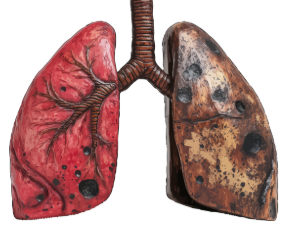
These substances damage epithelial tissue in several ways.
Damage to Ciliated Columnar Epithelium
Smoking:
Paralyzes cilia
Destroys ciliated cells
Stimulates goblet cells to produce excess mucus
Result:
Mucus builds up
Airways become blocked
Increased risk of infection
Chronic coughing
This is the basis of chronic bronchitis.
Damage to Squamous Epithelium in Alveoli
Smoking also causes:
Inflammation
Breakdown of alveolar walls
Loss of elastic fibres
Enlargement of air spaces
In emphysema:
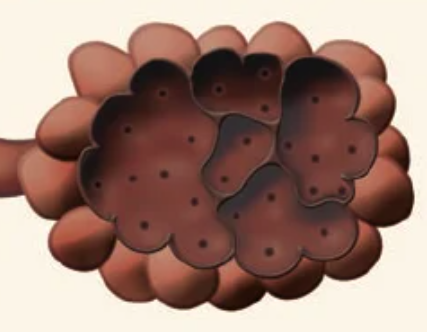
Alveoli merge together
Surface area for diffusion decreases
Gas exchange becomes inefficient
This means less oxygen enters the blood.
Structural Changes in COPD
Normal Alveoli: | COPD Alveoli: |
|
|
 |  |
This leads to:
Breathlessness
Reduced oxygen delivery
Fatigue
Exam Model Answer
COPD is caused mainly by smoking, which damages epithelial tissue in the lungs. In the airways, smoking destroys ciliated columnar epithelial cells and stimulates goblet cells to produce excess mucus. This prevents the removal of mucus and pathogens, leading to chronic bronchitis. Smoking also damages the squamous epithelium lining the alveoli, causing inflammation and destruction of alveolar walls. This reduces surface area for diffusion and decreases oxygen uptake. As a result, gas exchange becomes less efficient, leading to breathlessness.
Key Terms to Remember
Squamous epithelium
Columnar epithelium
Goblet cells
Ciliated cells
Diffusion
Surface area
Emphysema
Chronic bronchitis


Comments