
What Is an Access to HE Diploma in Science? A Guide for Adults Returning to Education


Have you been thinking about going to university but don't have A-levels? Perhaps you've been out of education for years and aren't sure where to start.
If so, an Access to Higher Education (HE) Diploma could be exactly what you're looking for.
Every year, thousands of adults use an Access to HE Diploma to gain entry to university courses such as Nursing, Midwifery, Paramedic Science, Biomedical Science, Physiotherapy, Radiography, Psychology and many more.
In this series guide, we'll explain what an Access to HE Diploma is, who it's designed for, and what you can expect if you decide to take one.
What Is an Access to HE Diploma?
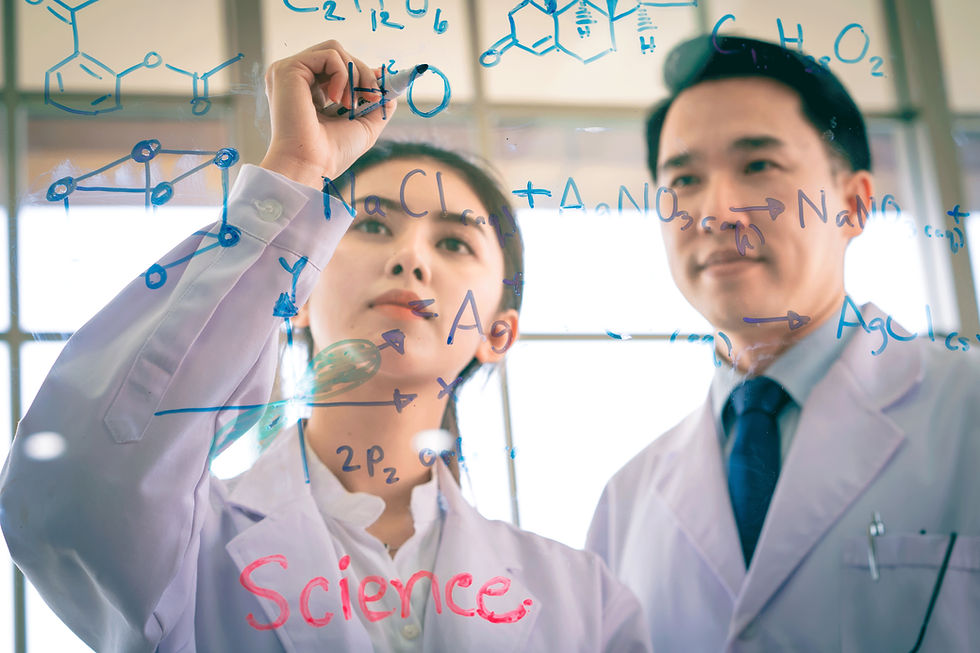
An Access to HE Diploma is a Level 3 qualification designed specifically for adults aged 19 and over who want to progress to university.
It provides an alternative route to traditional qualifications such as A-levels and is recognised by universities across the UK.
Most Access courses can be completed in one academic year, making them a popular option for adults who want to fast-track their journey into higher education.
The qualification is regulated by the Quality Assurance Agency (QAA) and delivered by colleges and training providers throughout the country.
Who Is It For?
Access courses are designed for adults who may have:
Left school without the qualifications needed for university
Been out of education for several years
Changed career direction
Taken time away from study to raise a family
Wanted to enter a professional career that requires a degree

Many students worry that they are "too old" to return to education. In reality, Access classrooms often contain learners ranging from their early twenties to their fifties and beyond.
In fact, being older can be an advantage. Adult learners often bring valuable life experience, determination and motivation that help them succeed.
What Science Subjects Can You Study?
There are many different Access pathways available, including:
Science
Nursing and Midwifery
Health Professions
Social Science
Psychology

For students interested in healthcare, science or medical careers, Access to HE Science courses are particularly popular.
These courses commonly include topics from:
Biology
Cells and tissues
Genetics
Human physiology
Disease and immunity
Homeostasis
Chemistry
Atomic structure
Bonding
Acids and bases
Organic chemistry
Chemical calculations
Physics
Forces and motion
Energy
Electricity
Waves
Medical physics applications
The exact content will vary depending on the awarding organisation and college delivering the qualification.
Is It Difficult?
One of the biggest concerns prospective students have is whether they will be able to cope with the workload.
The honest answer is that Access courses are challenging. They are designed to prepare you for university study, so the expectations are much higher than GCSE level. However, many students are surprised to discover that the biggest challenge isn't the science itself—it's getting back into the habit of studying.
Common challenges include:
Managing time effectively
Writing assignments
Referencing sources correctly
Understanding scientific terminology
Balancing study with work and family commitments

The good news is that these are skills that can be learned and improved with practice. Most students experience a steep learning curve during the first few months before becoming much more confident as the course progresses.
How Is It Assessed?
Assessment methods vary between providers, but often include:
Written assignments
Laboratory reports
Research projects
Presentations
Exams or tests
Students are usually awarded Pass, Merit or Distinction grades. These grades can be important because universities often make offers based on the number of credits achieved at Merit or Distinction level.
Can You Get Into University With an Access Diploma?
Yes.
Access to HE Diplomas are widely recognised by universities throughout the UK. Many students successfully progress onto degrees such as:
Nursing
Midwifery
Paramedic Science
Physiotherapy
Occupational Therapy
Radiography
Biomedical Science
Forensic Science
Psychology
Biology
Chemistry
Universities publish their entry requirements on their websites, so it is always worth checking the requirements for your chosen course before enrolling.
What Skills Will You Develop?
An Access course helps students develop much more than subject knowledge. You'll also build:
Academic writing skills
Critical thinking
Research skills
Independent study habits
Time management
Confidence in learning
These skills are invaluable when progressing to university and beyond.
How Can an Applied Science Tutor Help?

Many Access to HE students are capable of succeeding but often lack confidence, particularly if they have been away from education for several years. An experienced Applied Science tutor can provide personalised support to help bridge knowledge gaps, explain difficult scientific concepts in a way that makes sense, and develop the study skills needed for Level 3 learning.
Tutoring is about much more than simply understanding biology, chemistry or physics. A good tutor can help with assignment planning, scientific terminology, revision techniques, exam preparation, academic writing and UCAS applications. They can also provide reassurance during challenging periods when motivation is low or coursework feels overwhelming.
For many adult learners, having someone who understands both the academic demands of the course and the unique challenges of returning to education can make a significant difference to their confidence and progress. With the right support, students often discover they are capable of achieving far more than they initially believed possible.
Final Thoughts
Starting an Access to HE Diploma can feel intimidating, especially if you've been away from education for several years.
Many students begin the course feeling uncertain about whether they are capable of succeeding. By the end of the year, they often find themselves submitting university applications, achieving Distinctions and preparing for the next stage of their journey.
You do not need to know everything before you start.
You simply need the willingness to learn, ask questions and keep going when things feel challenging. Returning to education may be one of the biggest decisions you ever make—but for many adult learners, it is also one of the most rewarding.


Comments